

Digital displays have become a staple in transportation hubs – from airport terminals to train stations – where they provide real-time flight and transit information to thousands of passengers. Modern digital signage now replaces static signs with dynamic screens that can show schedules, wayfinding directions, safety alerts, and even advertisements in high definition. This not only keeps travelers informed with up-to-the-minute updates but also improves the overall passenger experience by reducing confusion and perceived wait times.
QUOVIN, a leading digital signage platform, offers a cloud-based solution tailored for transportation displays, making it easy for transportation facilities to deploy and manage these smart displays at scale. By leveraging QUOVIN’s tools, transit hub operators can centrally control content across all their screens – whether in an airport or a bus network – ensuring consistent messaging and quick updates when it matters most. In this post, we’ll explore the benefits of digital signage in transportation and how QUOVIN empowers transit operators to inform and engage travelers more effectively.
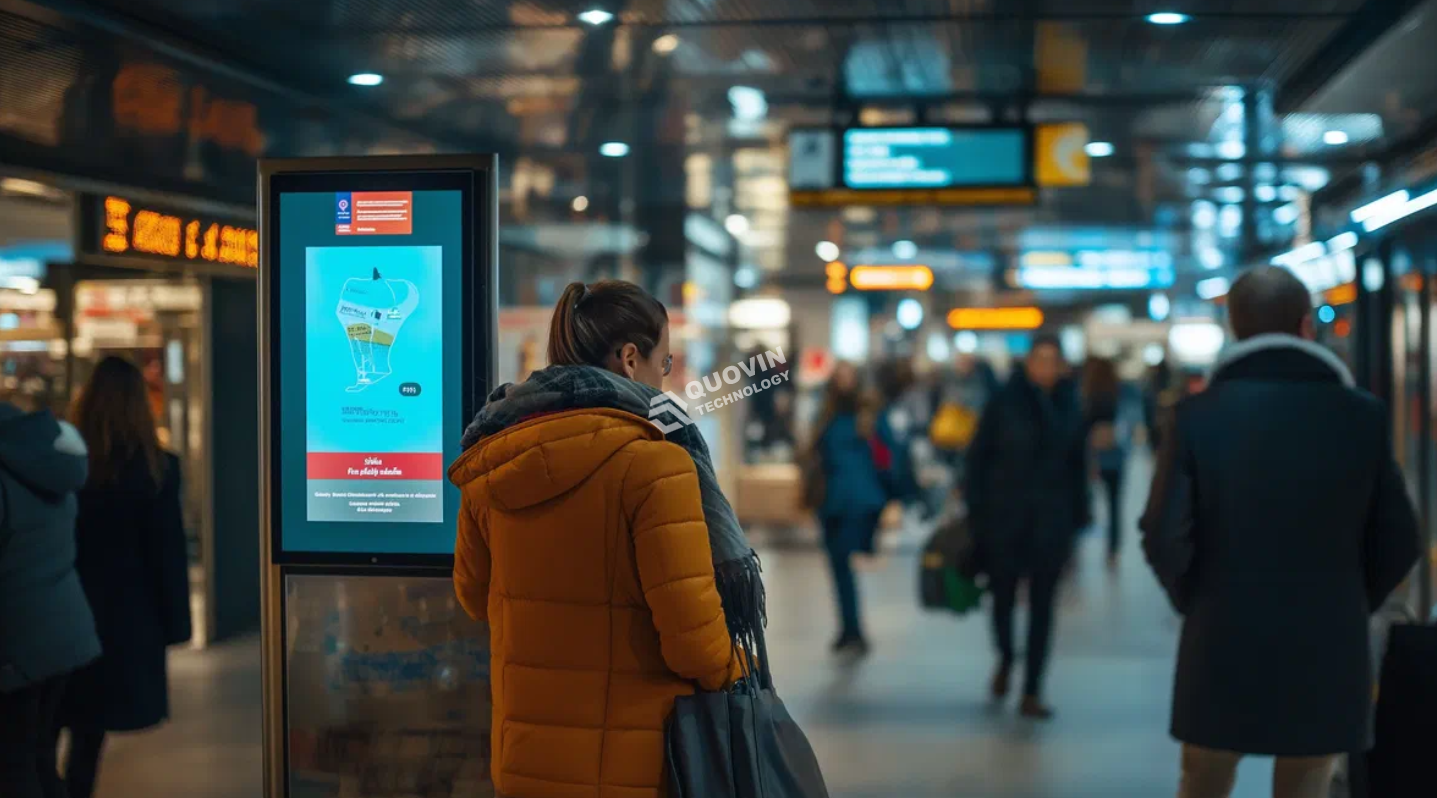
The importance of digital signage in transportation
Transportation environments are fast-paced and information-driven. Digital signage plays a critical role in delivering timely information and enhancing the journey for commuters and travelers. Key benefits include:
Real-time information updates: Schedules in transit can change rapidly due to delays, cancellations, or service changes. Digital signage allows instant updates to arrival/departure boards and platform displays so passengers always see the latest information. For example, high-resolution LCD screens in airports and train stations automatically refresh with real-time data. With a platform like QUOVIN, transit staff can push updates to all relevant screens via the cloud within seconds, ensuring everyone is informed simultaneously. In most cases, these updates happen automatically through integration with the trasit facilitie’s data systems and the QUOVIN API. This immediacy builds trust and reduces uncertainty for passengers who depend on accurate, current information.
Enhanced passenger experience & wayfinding: Beyond schedules, digital signs improve the overall travel experience. They can display directional guidance or even announcements for boarding and gate changes. In crowded transit hubs, this wayfinding capability helps newcomers navigate complex terminals with ease. Screens can also share helpful content like news, weather, or trivia to keep waiting passengers engaged. By providing useful and engaging content, transportation providers make wait times feel shorter and reduce passenger frustration. The flexibility of QUOVIN’s software means content can range from simple images and videos to live webpages or even custom apps showing things like subway maps – all in rotation as part of a programmed playlist.
Emergency alerts and safety notifications: In case of emergencies or service disruptions, digital signage becomes a crucial communications tool. Instead of relying on static signs or public address alone, screens can instantly switch to display emergency messages, evacuation instructions, or safety alerts in multiple languages. With QUOVIN, operators can trigger a priority playlist that overrides regular content on all screens to broadcast urgent announcements. For instance, if a train station must be evacuated, every QUOVIN-powered display can flash evacuation directions and exit locations, ensuring the message reaches everyone on-site. This centralized control of content allows faster response times during critical events.
Advertising and revenue opportunities: Transportation hubs are prime locations for advertising, given the high foot traffic and dwell times. Digital signage enables transit authorities and facility operators to display advertising content – from local business ads to national brand campaigns – on screens alongside informational content. Bus shelters and station platforms increasingly use outdoor digital displays to show not just route maps and schedules, but also rotating digital adverts while riders wait. This creates a new revenue stream without the additional overhead of printing posters. QUOVIN supports high-definition images and videos (even 4K), ensuring ads are eye-catching and professional. With its scheduling feature, different ads can play at different times of day or in specific locations, allowing targeted advertising (for example, promoting a coffee shop during morning commute hours). By integrating advertising into their digital signage, transportation providers can offset costs and invest more in passenger amenities, all managed through QUOVIN’s easy interface.
Next, we’ll look in more depth at how QUOVIN’s platform specifically supports the above use cases, providing the tools needed to deploy and manage transit digital signage effectively.